Are there sandy beaches in Dubrovnik?
Not really, and it is better to know that before you pack. Dubrovnik sits on karst, the same porous limestone that makes the cliffs and the caves and the walls of the Old Town itself, and limestone coastlines do not produce sand. They produce pebble, shingle, smooth rock and, where the city has helped things along, concrete platforms with ladders. Every beach you can walk to from the Old Town falls into one of those categories.
That is not the whole story though. There are genuinely sandy beaches within reach of Dubrovnik, with actual soft sand that shelves gently into the water, and the best of them is an hour away by boat rather than a full day’s drive. If sand matters to you, whether because of small children or simply because you do not enjoy walking into the sea over stones, the answer is to plan one trip rather than to expect it on your doorstep. The sandy beaches in Dubrovnik’s wider area are worth the boat ride.
What the city beaches are actually made of
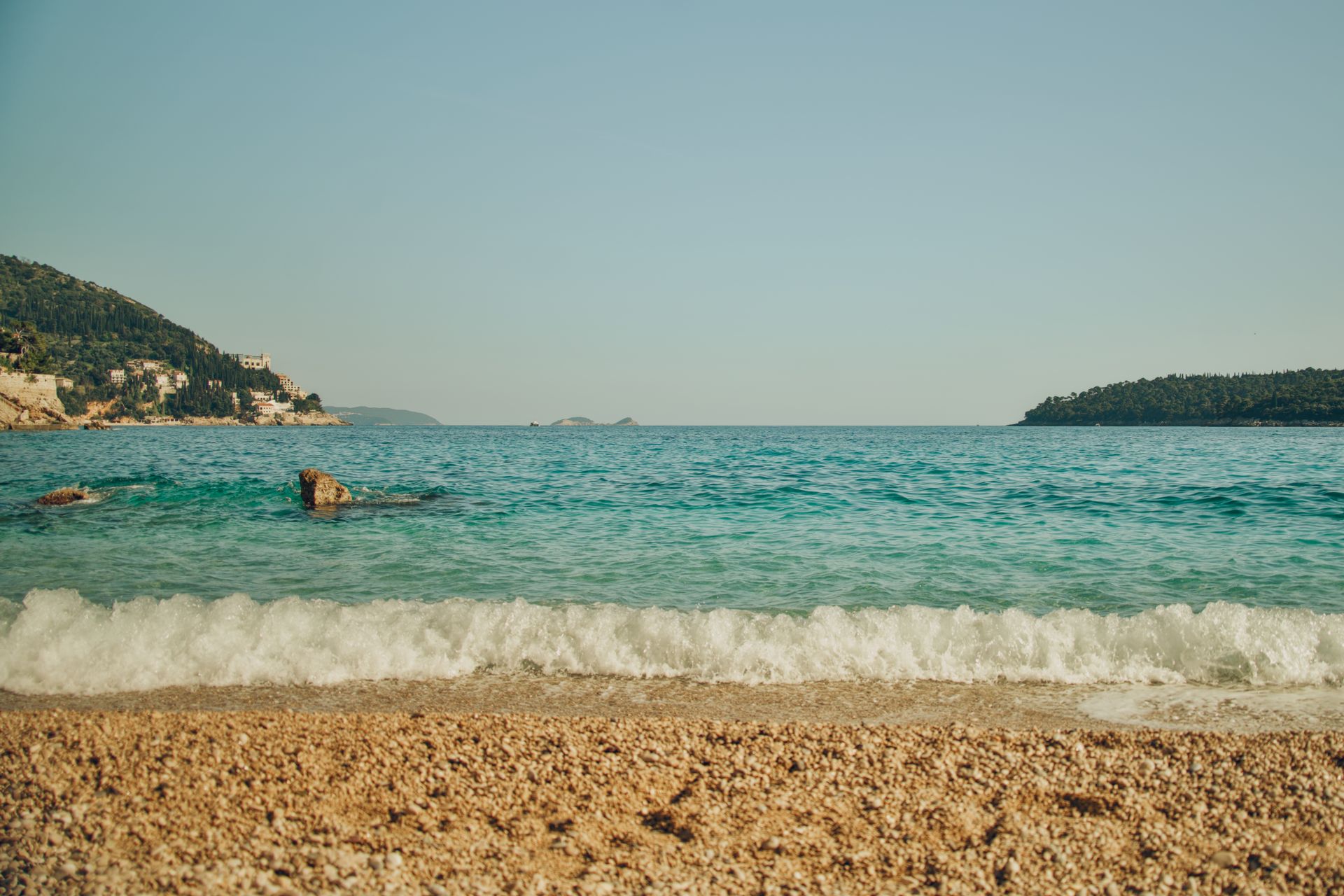
Travel listings use the word sandy very loosely along this coast, and photographs taken from a drone make shingle look like sand every time. Here is what you will actually be standing on at the beaches people most often end up at.
| Beach | Surface | Worth knowing |
|---|---|---|
| Banje | Pebble with a little sand | The famous one below the walls, with the postcard view of the Old Town and Lokrum |
| Copacabana (Babin Kuk) | Pebble and concrete with some sand | The most organised family beach, slides and water sports |
| Lapad bay | Pebble with concrete platforms | Shallow entry in the middle, the most family-friendly swimming near the city |
| Šulić | Pebble | Small cove tucked under the walls near Pile |
| Sveti Jakov | Shingle and pebble | Steps down, quieter, good afternoon light |
| Buža | Rock and concrete | Not a beach at all, a ladder off a cliff into deep water |
| Porporela | Concrete pier | Where locals swim, flat and easy entry, no beach to speak of |
None of these is a sand beach, whatever a listing says. Copacabana and parts of Lapad have had sand added over the years and will feel softer underfoot in places, which is why they get described as sandy, but neither is a natural sand beach. The official tourist board itself says that apart from a few exceptions the beaches in the Dubrovnik area are pebble or rock. If you want to know what the coloured flags on these beaches mean, our article on beach flags covers that.
The genuinely sandy beaches near Dubrovnik
Three beaches in the wider region are the real thing. One is an easy half day from the city, the other two need more planning.
Šunj on Lopud, the one to actually do
Šunj is the answer to this question and it is the only one most visitors need. It is a long sandy bay on the far side of Lopud, one of the Elafiti islands, with water so shallow that you can wade out a very long way before it reaches your waist. The tourist board describes it as the most popular sandy beach in the vicinity of Dubrovnik and that is not marketing, it is simply the nearest proper sand.
Getting there is a boat from Gruž to Lopud, then either a twenty minute walk across the island, a golf cart, or a bike. There are beach restaurants, deck chairs to rent, toilets and changing cabins, so you can spend a day there without carrying everything with you. Our article on the islands near Dubrovnik covers the boats and the rest of the Elafiti.
Prapratno on Pelješac
Prapratno is a sandy bay on the Pelješac peninsula, near the ferry port for Mljet and not far from Ston and its walls and oyster beds. It is roughly an hour and a half north of Dubrovnik by road, which makes it a car or tour day rather than a spontaneous swim, but it combines well with a day on Pelješac.
Saplunara on Mljet
Saplunara, on the southern end of Mljet, is the largest stretch of real sand in the region, backed by pine forest. It is also the furthest, needing a ferry and then a drive across a long thin island, so it is realistically an overnight rather than a day trip from Dubrovnik.
If the reason is small children, sand is not the thing to optimise for
Parents usually ask about sand because they want shallow water and an easy walk in, and on this coast those two things come apart from the surface underfoot. A pebble beach with a gentle shelf is far better for a toddler than a sand beach that drops away quickly, and Dubrovnik has several of the former.
Lapad bay is the practical choice near the city: the middle of the beach shelves slowly, there is a buoyed swimming zone, and the promenade behind it is flat enough for a pushchair. Copacabana on Babin Kuk is the other, with more organised activity. The single piece of equipment that changes a holiday here is a pair of cheap water shoes for everyone, which removes the whole problem of walking over stones. Our articles on Copacabana beach and Dubrovnik with kids go into both.
What to expect in the water
One advantage of a rocky coast is that the water is clear. There is no fine sand to be stirred up, so visibility stays good even on a busy day and even close to the city, which is part of why snorkelling works well here. The flip side is that sea urchins live on rock rather than on sand, so the rocky entries are where you want to look before you put a foot down, and water shoes solve that too. Our article on jellyfish and sea urchins in Dubrovnik covers what is actually in the water here and what is not.
Questions people ask
Are there sandy beaches in Dubrovnik?
Not in the city itself. Dubrovnik’s coast is karst limestone, so its beaches are pebble, shingle, rock or concrete. The nearest genuine sand is Šunj on the island of Lopud.
Which is the best sandy beach near Dubrovnik?
Šunj on Lopud, reachable by boat from Gruž and then a twenty minute walk or a golf cart. It is a long sandy bay with very shallow water and beach facilities.
Is Banje beach sandy?
No. Banje is pebble with a little sand mixed in. Its appeal is the view of the city walls and Lokrum rather than the surface underfoot.
Is Copacabana beach in Dubrovnik sandy?
Partly, and not naturally. Copacabana is pebble and concrete with sand added in places. It is the most organised family beach near the city but it is not a sand beach.
Do I need water shoes in Dubrovnik?
They are the single most useful thing to bring. They make pebble entries comfortable and they protect against sea urchins on the rocky entries.
Where is the biggest sandy beach near Dubrovnik?
Saplunara on the southern end of Mljet, roughly two kilometres of soft sand backed by pine forest. It needs a ferry and a drive, so plan an overnight rather than a day trip.
Take the boat once and stop worrying about it
The disappointment people feel about this is almost always a matter of expectation rather than of the beaches themselves. Dubrovnik’s swimming is genuinely good: the water is clear, it is warm from June well into October, and you can get into the sea within a few minutes’ walk of a medieval city centre, which is not something most destinations offer. It simply does not come with sand, and no amount of searching will produce a sandy beach in Dubrovnik that nobody else has found.
So treat it as one trip rather than a daily problem. Give Šunj a day early in your stay, go back to the pebbles and the ladders for the rest of it, and buy the water shoes on the first morning. If you are travelling with a toddler, the gentle shelf at Lapad will serve you better than any amount of sand anyway. The one thing worth avoiding is the opposite plan, which is booking accommodation on the basis of a drone photograph of what turns out to be grey shingle.
Photography: Unsplash
Get in touch:
 Whatsapp
 Send sms
 Call us