
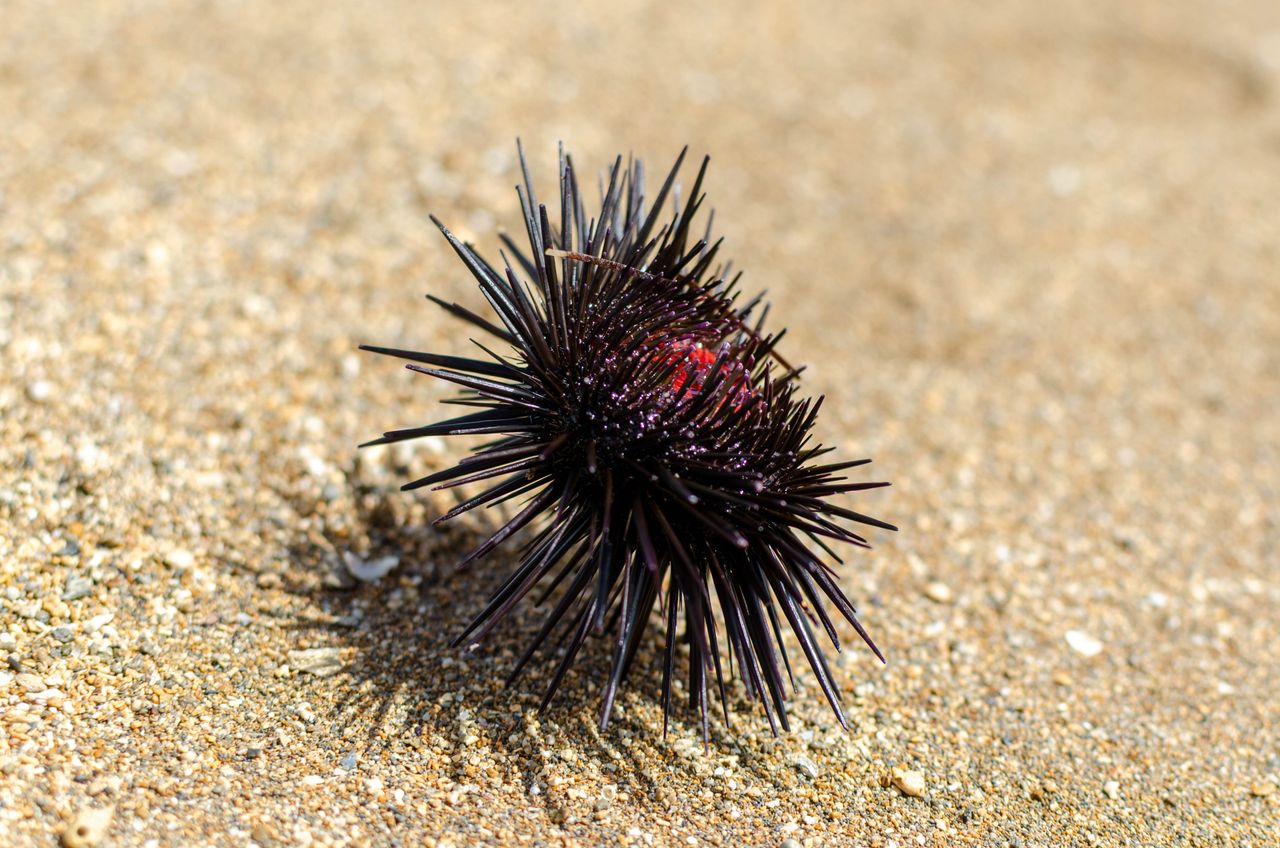
Jellyfish and sea urchins in Dubrovnik
Swimming around Dubrovnik is genuinely safe, and the two things visitors usually worry about, sea urchins and jellyfish, are more of a minor nuisance than a real danger. Sea urchins are by far the more common encounter, since Dubrovnik’s coastline is almost entirely rock and pebble. Jellyfish show up far less often, and when they do, most species barely register as more than a mild sting.
Want to know where each one is more likely to turn up? Or what to actually do if you have a run-in with either? We got you covered!
Are Dubrovnik beaches safe?
Yes. Dubrovnik’s beaches are considered among the safest swimming spots in the Adriatic. Water quality is excellent, dangerous marine life is extremely rare, and the most common issue visitors run into is simply stepping on a sea urchin while entering the water barefoot. Most beaches also become deep quite quickly close to shore, so swimming ability is a bigger practical consideration than marine life for most visitors. During the main summer season, several of the more popular beaches are supervised by lifeguards, while quieter coves generally are not, which is covered in more detail further down.
Here’s how the main things people ask about actually compare.
| Marine life | How common | Risk | Prevention |
|---|---|---|---|
| Sea urchins | Very common | Low | Water shoes |
| Jellyfish | Occasional | Low | Check flags, avoid blooms |
| Weever fish | Rare | Moderate | Water shoes |
| Sharks | Extremely rare | Negligible | None needed |
Sea urchins in Dubrovnik
Sea urchins are not poisonous, but their spines are sharp, break off easily under skin, and can cause a genuinely painful few days if you step on one. They cluster on rocky seabeds and cling to submerged stones close to shore, which describes most of the coastline around Dubrovnik.
Locals tend to treat them as background scenery rather than a real concern, and they’re actually a reassuring sign in one sense: sea urchins only thrive in clean, unpolluted water. They’re also easiest to spot early in the day, thanks to how exceptionally clear the water around Dubrovnik usually is.
Where you’re more and less likely to find them?
Rocky coves and beaches with a jetty or ladder entry, like the areas around Danče, Šulić and the stretch near Hotel Excelsior, tend to have more sea urchins clinging to the rocks just below the surface. Beaches with a sandy or fine-pebble seabed, such as Copacabana or Lapad Bay, have noticeably fewer, since urchins prefer a rocky surface to grip. Either way, take a look before you step down, just in case.
What to do if you step on one?
Water shoes are the simplest prevention and worth packing regardless of which beach you choose. If you do step on one, try to remove the spines gently with tweezers without breaking them further. Definitively avoid digging at the skin, because that tends to push fragments in deeper rather than out. Local pharmacies sell a black ointment called Ihtamol, which helps remaining spine fragments work their way out on their own over a few days. A bit smelly, but super efficient! If the area becomes increasingly swollen, red or painful rather than settling down, go to a pharmacy or doctor rather than wait it out.
Jellyfish in the Adriatic near Dubrovnik
Jellyfish are far less common than sea urchins around Dubrovnik, and most species that do show up cause nothing worse than a mild, short-lived sting. The main one worth knowing by name is the mauve stinger (Pelagia noctiluca), a small, semi-transparent jellyfish that can arrive in occasional blooms and give a genuinely painful sting.
Danče beach saw a notable bloom in the summer of 2022, when medical teams treated several sting cases in a single morning, which is the kind of event that’s memorable precisely because it’s unusual rather than typical. Blooms like this happen across the wider Adriatic and are driven by currents and water temperature rather than anything specific to local pollution or water quality, so a bloom isn’t a sign that something is wrong with the sea itself.
When they’re more likely to appear
Jellyfish blooms in the Adriatic tend to cluster in late summer and into autumn, though it varies year to year depending on currents and water temperature. There’s no reliable way to predict a bloom in advance, which is exactly why the flag system and lifeguard presence at the main beaches matter more than trying to guess the pattern yourself.
What to do if you’re stung?
Rinse the area with seawater or vinegar, never fresh water, since fresh water can trigger any remaining stinging cells to fire. If tentacle fragments are still stuck to the skin, remove them carefully rather than rubbing the area, which spreads the sting further. Most stings settle down within a few hours with basic care. If you have difficulty breathing, experience widespread swelling or a reaction that seems to be getting worse, you should get medical help.
How to tell if a beach is being watched?
A purple flag on a Croatian beach signals jellyfish or other marine life in the water and means it’s best to stay out until it’s lowered. Our article on what the flags mean at the beach covers the full colour system in detail, including Banje Beach’s Blue Flag status, a separate certification tied to water quality and environmental standards.
Beyond the flags, the Dubrovnik Red Cross runs a seasonal lifeguard programme, co-funded by the city, that places trained lifeguards at a handful of the most popular beaches, typically Danče, Mandrač, Štikovica, and Šulić, starting from around late June each year. The exact list of beaches can shift slightly from year to year, so it’s worth checking locally if a lifeguard on duty matters to your plans.
Lifeguards are also generally only on duty during the main summer season and during daytime hours, so an early morning or evening swim, even at one of the supervised beaches, shouldn’t be treated as watched. Plenty of smaller coves and rocky swimming spots around the coastline have no lifeguard at all, especially outside the main season or away from the marked beaches, so keep this in mind if you’re swimming somewhere quieter with children or if you’re not a confident swimmer.
Swimming with children
Families with young children generally don’t need to worry about jellyfish or sea urchins any more than local families do. Water shoes are usually enough to prevent sea urchin injuries. For an extra layer of reassurance, choose a lifeguarded beach during the main summer season, such as Lapad or Copacabana.
Other things worth knowing about
Weever fish, a small, sand-coloured fish, bury themselves in shallow sandy patches and are almost impossible to spot, unlike sea urchins, which stay visibly attached to rocks. Stepping on one directly is uncommon, but the sting is considerably more painful than a sea urchin spine, delivered through venomous spines on its dorsal fin.
Water shoes, the same ones that help with sea urchins, almost completely remove the risk. Sharks come up constantly in nervous pre-trip searches about the Adriatic, but they’re a non-issue in practice: encounters near Dubrovnik are essentially unheard of, and the sea here is considered among the safest swimming water in the Mediterranean.
Frequently asked questions
You’ll stop noticing after the first day or two
The Adriatic around Dubrovnik consistently ranks among the cleanest parts of the Mediterranean, which is exactly why sea urchins thrive here in the first place. For most visitors, a pair of water shoes and a little common sense are all that’s needed. After a day or two, you’ll probably stop noticing sea urchins altogether, just like the locals do.
If something does happen, a sea urchin spine or a jellyfish sting is uncomfortable rather than serious in the overwhelming majority of cases, and pharmacies around the Old Town are well used to dealing with both. Check out our article on doctors, hospitals, and pharmacies in Dubrovnik if you want to know exactly where to go.
Photography: Pexels
Get in touch:
 Whatsapp
 Send sms
 Call us
Explore Our Tours:

Dubrovnik Scenic Sunset Tour with a Premium Wine Experience

From Sea to Plate: Private Oyster Farm Experience from Dubrovnik

Mostar & Kravica Waterfalls Private Day Trip from Dubrovnik

Plitvice Lakes, National Park, Day Trip from Dubrovnik

Taste of Bosnia: Private Trebinje Gastro & Wine Tour
