
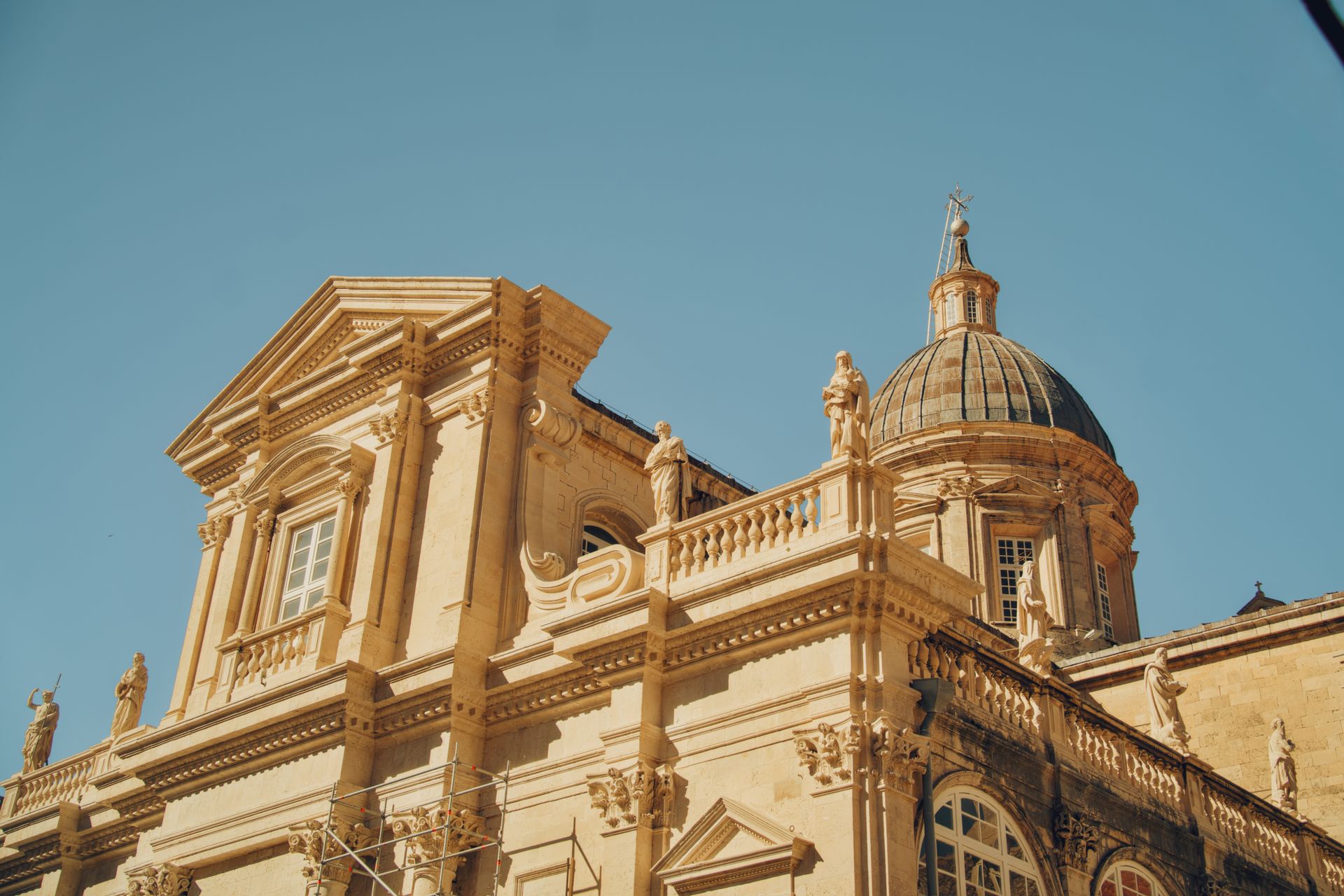
Feast of St Blaise in Dubrovnik
Every year on February 3, Dubrovnik stops for its patron saint. Church bells ring across the Old Town, priests carry centuries-old reliquaries down Stradun and thousands of locals, many in traditional dress, follow behind them. It is one of the oldest continuously held civic festivals in Europe, marked without interruption since 972, and in 2009 UNESCO added it to its list of Intangible Cultural Heritage.
For visitors, it is also one of the few times of year when Dubrovnik feels entirely like a local event rather than a tourist one. There is no ticket to buy and no queue to join, just a city living out a tradition older than most of its own buildings. Below is what the festival actually involves, when each part of it happens, where to stand, what to expect and a few things worth knowing if you plan to be there yourself.
What is the Feast of St Blaise?
The Feast of St Blaise (Croatian: festa svetog Vlaha) marks the day in 971 when, according to local legend, the saint appeared to a Dubrovnik priest and warned the city of a coming Venetian attack. The priest, Stojko, brought the vision to the city council, the council acted on it and the attack was avoided.
From that point on, St Blaise (Croatian: sveti Vlaho) became Dubrovnik’s protector, and his image still appears on the city gates, on the old coins of the Republic of Ragusa and on the church that bears his name at Luža Square. The connection between the saint and the city was so close that, historically, almost every gate, public building and official seal of the Republic of Ragusa carried his image somewhere on it.
The festival that grew out of that legend is not just a religious observance. Locals also refer to February 3 as the Day of Dubrovnik, a civic holiday tied to the city’s own identity as much as to the saint himself. That double meaning, part religious feast and part city birthday, is part of why the celebration has survived more or less unchanged for over a thousand years.
Why UNESCO recognised it?
UNESCO added the Feast of St Blaise to its Representative List of Intangible Cultural Heritage in 2009, not for the objects involved, the reliquaries or the church, but for the living tradition itself. The listing recognises how unbroken the celebration has been, how tightly it binds the identity of an entire community to one figure and how each generation has kept the ritual going while still making small adjustments of its own. It sits alongside things like traditional music or craft techniques on the list, forms of heritage that exist in practice rather than in a museum.
When is the Feast of St Blaise?
The main feast day is always February 3, but the celebration runs for several days around it, starting the evening before and closing a few days later. Here is the full sequence.
|
Date |
What happens |
|---|---|
|
February 2 |
Candlemas eve: white doves released in front of St Blaise’s Church, the saint’s flag raised on Orlando’s Column |
|
February 3 |
The feast day and Day of Dubrovnik: 10am mass, musket fire near Pile Gate, the main procession along Stradun, the blessing of throats, the flag ceremony traditionally around 3pm |
|
February 4 to 5 |
Exhibitions, concerts, plays and themed walking tours continue around the Old Town |
|
February 6 |
Closing mass at the Church of St Blaise on Gorica and the lowering of the saint’s flag |
What happens during the festival?
February 2: doves, bells and a flag on the column
The festivities begin the evening before the feast day, on the Catholic holiday of Candlemas. Church bells ring across the Old Town and white doves, released in front of St Blaise’s Church, symbolise the freedom and peace the city has associated with its patron saint ever since the legend of the averted attack. St Blaise’s own flag is then raised on Orlando’s Column at Luža Square, where it will stay for the rest of the festival. It is a quieter start than the following day, and a good time to see the Old Town settle into festival mode without the biggest crowds yet.
February 3: muskets, the procession and the blessing of throats
The feast day itself opens with morning mass at 10am, followed by the main event: the procession. It is announced by the Trombunjeri, a ceremonial group who fire antique muskets near Pile Gate to mark the start. Their gunfire is not decorative violence, it recreates the old tradition of firing weapons on the same spot to warn off enemy ships approaching by sea, a tradition the group traces back centuries and still performs with the same muskets and technique used historically.
From Brsalje, the procession moves along Ulica od Puča and Stradun, carrying St Blaise’s most treasured relics, his skull, hand and a bone from his throat, in ornate reliquaries dating back as far as the 11th century. Behind the reliquaries come priests, church dignitaries, banner bearers from each parish in traditional folk costume, a brass band and the Festanjuli, two respected local men, traditionally sea captains or craftsmen given the honour each year, who serve as the ceremonial hosts of the feast and walk directly behind St Blaise’s own banner.
The banner bearers deserve a second look. Each parish, village and brotherhood around Dubrovnik sends its own flag and its own bearer, and being chosen for the role is a genuine honour rather than a formality, so much so that some smaller villages struggle to find even one volunteer willing to take it on, while in others, several people compete for the privilege. There is no exact published figure for how long the procession itself takes to pass a single point, but between the 10am mass and the 3pm flag ceremony, plan to have most of the day loosely occupied if you want to see all three main moments.
Inside St Blaise’s Church, priests perform the traditional blessing of throats, since the saint is also venerated as a protector against throat illness, a tradition that draws long, patient queues of locals through most of the day.
In the afternoon, attention shifts to the Cathedral, where flag bearers from each parish take turns showing off an old local skill, traditionally around 3pm: swirling and lowering their embroidered banners in a precise, practiced motion. Crowds gather specifically for this part, and the most skilled bearers get the loudest applause of the day.
The days that follow: exhibitions, concerts and a quiet close
The festival does not end when the procession does. In the days after February 3, the Old Town hosts a wider programme of art exhibitions, concerts, plays and themed walking tours built around the saint’s history. It winds down gradually rather than stopping abruptly, and closes on February 6 with a final mass at the Church of St Blaise on Gorica, just outside the old city walls, followed by the lowering of the saint’s flag from Orlando’s Column.
Where should I stand to watch the procession?
The procession is a public event on public streets, so there is nothing to book and nothing to buy. Where you stand changes what you actually see, so it is worth picking a spot based on which part of the day matters most to you.
|
Spot |
What you’ll get |
|---|---|
|
Brsalje, near Pile Gate |
The opening of the procession, where the Trombunjeri fire their muskets. Loud, dramatic and the natural starting point if you want to follow the procession as it moves. |
|
The start of Stradun |
A clear, straight view down the full length of the street as the procession files in. Arrive early, since this stretch fills up fast. |
|
Luža Square, in front of the church |
The most crowded single spot, but also the most rewarding, since this is where the relics arrive and where the procession formally concludes. |
|
The Cathedral steps |
The best vantage point for the afternoon flag ceremony, where banner bearers from each parish perform the flag-waving display. |
|
Café terraces along Stradun (if open) |
A seated, unhurried view if you’d rather watch from a coffee than stand in a crowd. Not guaranteed to be open in early February, so treat this as a bonus rather than a plan. |
Best spots for photos
Orlando’s Column and the church façade both photograph well at any point in the day, but the light changes what you get. Morning gives flat, even light that is easy to work with for detail shots of the costumes and banners.
The procession itself, mid-morning to early afternoon, is when the colour and movement are at their best. If you stay into golden hour toward late afternoon, the warm light on the Old Town’s stone façades is worth the wait, even after the main events have wrapped up. The top of the Jesuit Stairs and, if it happens to be open, the City Walls both give a useful elevated angle over the crowds on Stradun.
Did you know?
St Blaise’s image was so closely tied to Dubrovnik’s identity that it appeared on nearly every gate, public building and official seal of the Republic of Ragusa.
The Festanjuli role is only ever held for a single year before passing to someone new.
Dubrovnik’s Trombunjeri still fire the same style of antique muskets used centuries ago, at the same spot near Pile Gate.
A one-day plan for the Feast of St Blaise
If you only have the one day and want to catch the main moments without wasting time waiting around, this rough schedule covers the highlights.
|
Time |
What to do |
|---|---|
|
8:30 |
Coffee near Pile Gate while the Old Town is still quiet |
|
9:30 |
Find a spot along Stradun or near Luža Square before the crowd builds |
|
10:00 |
Morning mass begins |
|
11:00 |
Watch the main procession move along Stradun toward the church |
|
12:30 |
Step inside St Blaise’s Church, or watch the queue for the blessing of throats |
|
13:00 |
Lunch, ideally šporki makaruli, the traditional dish of the day |
|
15:00 |
Flag-waving ceremony at the Cathedral |
|
16:00 |
Walk the City Walls if you still have energy, weather and daylight permitting |
Festival etiquette
Most of this is common sense, but a few points are specific to this particular festival and worth knowing in advance, since the crowd around you will be mostly local families rather than other tourists.
- Don’t walk through the procession once it has started, even to cross the street; wait for a natural gap or go around
- Remove hats when you step inside St Blaise’s Church
- Photography is welcome, but avoid using flash during the mass or the blessing of throats
- Keep pathways and doorways clear rather than blocking them for a better view
- Don’t climb barriers, monuments or church steps for a higher vantage point
- Stay quiet during the blessing itself, even if you’re only watching rather than taking part
A few things tourists don’t expect
- Church bells start ringing early, well before most visitors are up
- The muskets are genuinely loud, closer to a gunshot than a firework
- Locals kiss the relics and the bishop’s hand as the procession passes; this is normal and not something to stare at
- A large share of the crowd is in traditional folk costume, not costume for tourists’ benefit
- Priests spend much of the day blessing individual visitors at the church, one at a time, rather than as a single group ceremony
Practical details for visiting
- Dress for February, not for the postcards
Dubrovnik in early February looks nothing like the sun-soaked photos most visitors picture. Expect cold, often damp weather, with temperatures typically hovering not far above freezing at night. A proper coat matters more than anything else, especially if you plan to stand outdoors for the procession, which can run for well over an hour from start to finish. - What happens if it rains?
February in Dubrovnik is genuinely likely to bring rain, and the festival goes ahead regardless. The mass, procession and flag ceremony are all held rain or shine, with only exceptionally severe weather affecting parts of the programme. Pack accordingly: a proper rain jacket works far better than an umbrella once you’re standing in a packed crowd on Stradun. - Is it suitable for children?
Yes, and plenty of local families bring theirs. The main thing to plan around is the crowd itself rather than the content of the event, since narrow, packed streets are hard going with a stroller. If you’re bringing young children, a baby carrier works better than a pram for the procession itself, and arriving early to claim a spot with some breathing room is worth the wait. - Accessibility for wheelchair users
Stradun itself is flat and relatively easy to navigate, which makes it the most workable viewing spot for wheelchair users. The steps up to St Blaise’s Church and the Cathedral are a genuine obstacle if you want a close view of the flag ceremony specifically, so Luža Square at street level, rather than the steps themselves, is the more realistic option. The crowd density is the bigger practical issue on the day, so arriving well before the procession starts makes a real difference.
Getting there and parking
The Old Town itself is pedestrian-only, so there’s no driving to the procession regardless of where you’re staying. If you’re coming from outside the centre, the public bus network into Pile Gate is the simplest option, and February’s lower visitor numbers mean buses are far less crowded than in summer. Driving in is possible but not recommended: the paid parking areas near Ilijina Glavica and around the Old Town fill up quickly on the day itself, since a large number of locals travel in from the surrounding villages specifically for the festival. A taxi to Pile Gate avoids the parking question entirely if you’re not within easy walking distance.
What’s open on the day?
The City Walls stay open on February 3, though with shorter winter hours than in summer, so check the current schedule before planning a visit around them. The cable car to Mount Srđ does not run at all in February, regardless of the festival, so that particular view is off the table this time of year.
Most museums and galleries operate close to their normal hours, and restaurants and cafes aimed at visitors generally stay open throughout, since the festival itself brings steady foot traffic. The market at Gundulić Square runs as usual, though smaller, family-run shops and offices are the ones most likely to close for the day, since February 3 is also a local civic holiday.
What to eat during the Feast of St Blaise?
Two food traditions are specific to this festival and worth knowing about if you want to eat the way locals do that week.
- Bjondi and škuri keksi
These light and dark biscuits are traditionally baked by nuns and brought to church for blessing on Candlemas eve. They’re tied together with a red ribbon, a detail that ties back to the blessing of throats performed the following day. - Šporki makaruli
The traditional lunch on the feast day itself is šporki makaruli, literally “dirty macaroni”, a Dubrovnik specialty made with a slow-cooked meat sauce. Restaurants around the Old Town often put it on the menu specifically for the occasion, so it’s worth asking if you want to eat what most of the city is eating that afternoon.
If you’re visiting for the Feast, what else is worth combining it with?
Most visitors who plan a trip specifically around the festival end up staying two or three days rather than one, which leaves room to pair it with the rest of what winter Dubrovnik has to offer.
- The City Walls, quieter and cooler than any summer visit, if you haven’t already fit them into your festival day
- Lokrum, the island just offshore, which keeps a slower pace outside peak season
- The Rector’s Palace and the Old Town’s other museums, most operating on close to normal hours through the festival period
- Any overlapping dates with Dubrovnik’s winter festival programme, worth checking if your visit lines up
A festival older than the walls around it
Most of what draws people to Dubrovnik, the walls, Stradun, the terracotta rooftops, was already centuries old by the time anyone thought to photograph it. The Feast of St Blaise is one of the few things in the city that predates even that: a tradition that has run every February since before the Republic of Ragusa existed in the form most visitors now associate with the city.
If your trip happens to line up with early February, it is worth treating the festival as more than a scheduling curiosity. Dubrovnik in winter is quieter, cheaper and considerably less crowded than the Dubrovnik of July, and the Feast of St Blaise is the one week where that quieter city puts on its biggest show of the year anyway. If you’re planning to visit Dubrovnik in early February, consider staying at least two nights. You will get both the peaceful winter atmosphere and the city’s most important annual celebration, without the summer crowds either side of it.
Frequently asked questions
Photography: Pexels
Get in touch:
 Whatsapp
 Send sms
 Call us
Explore Our Tours:

From Sea to Plate: Private Oyster Farm Experience from Dubrovnik

Mostar & Kravica Waterfalls Private Day Trip from Dubrovnik

Private Peljesac Wine Tasting Tour from Dubrovnik
Dubrovnik Panorama Tour: Small-Group Sightseeing Drive

Plitvice Lakes, National Park, Day Trip from Dubrovnik
